
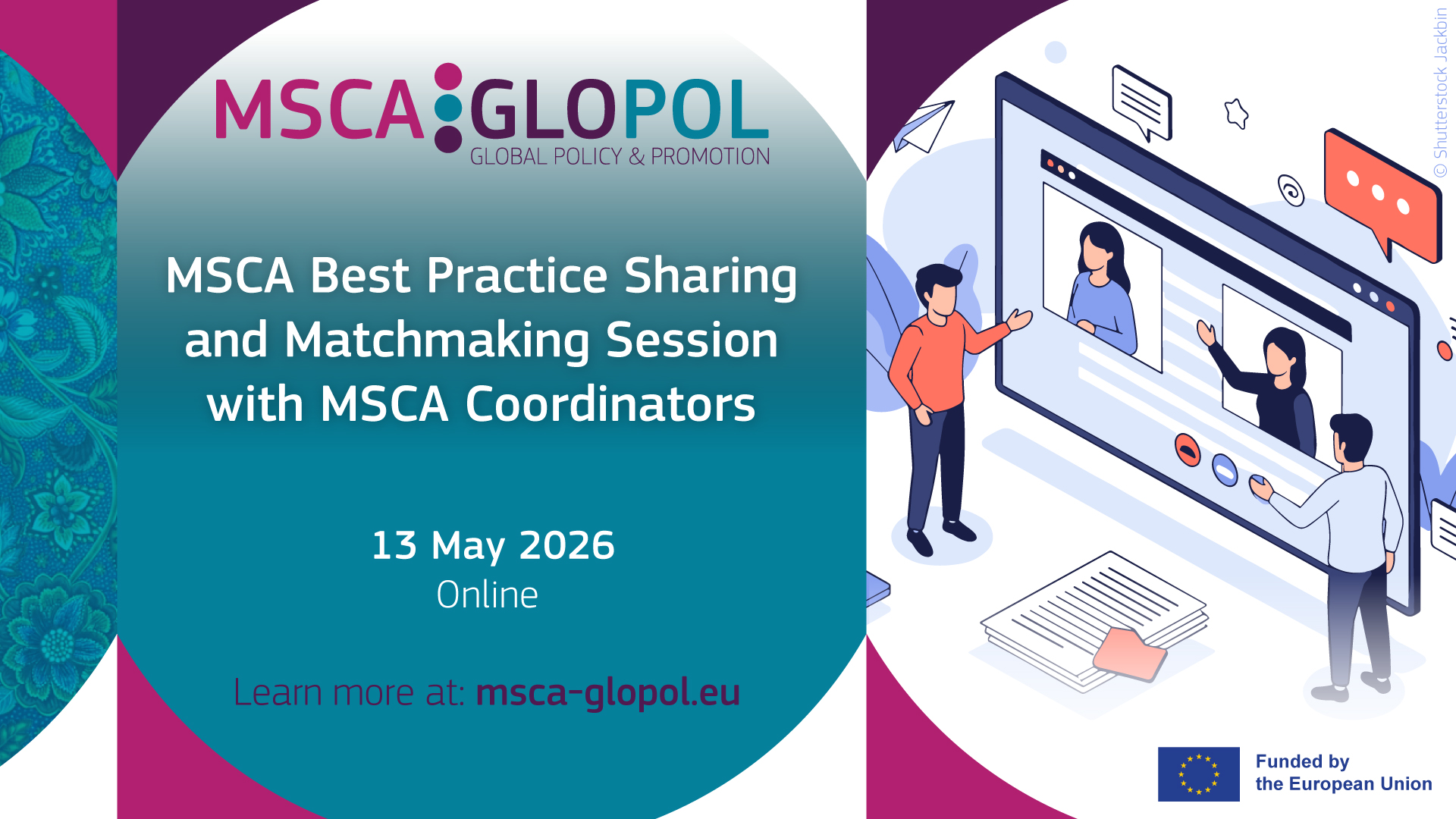
The MSCA-GLOPOL ASEAN team warmly invites representatives from universities, research institutes, start-ups and businesses to join the upcoming webinar on “MSCA Best Practice Sharing and Matchmaking Session with MSCA Coordinators” on Wednesday, 13 May 2026.
The session will bring together experienced MSCA project coordinators to share practical, first-hand insights on building strong international consortia. Discussions will focus on how coordinators identify and select partners, manage collaboration across institutions, and what they look for in potential partners from Southeast Asia. Through real project experiences, the speakers will offer concrete advice and recommendations for organisations seeking to join future consortia, helping participants better position themselves for successful collaboration.
The webinar is designed for researchers, universities, and organisations in Southeast Asia interested in connecting with European partners and strengthening their role in MSCA projects.
Date: Friday, 13 May 2026
Time: 10:30 – 11:30am CET, 15:30-16:30 Jakarta, 16:30-17:30 Singapore time
Format: Zoom Webinar
Register here
Agenda here
Speakers:
- Robin Gadbled, Policy Officer, DG Education, Youth, Sport and Culture, European Commission
- Dr Radu Ionescu, Senior Researcher and Principal Investigator, Estonian University of Life Sciences (EMU), Estonia
- Dr Sergio Moya, Group Leader, Center for Cooperative Research in Biomaterials – CIC biomaGUNE, Spain
Find a full description of this session and the Speakers CVs here.
Why should you join?
- Strengthen your readiness to engage in future collaborations by aligning your expertise, networks, and institutional priorities with consortium needs
- Gain practical insights into how experienced coordinators build strong, balanced consortia, from identifying the right partners to making selection decisions that strengthen the project
- Understand what European coordinators expect from partners in Southeast Asia, and how your organisation can position itself as a valuable and credible collaborator
- Learn how partnerships are effectively managed across institutions and sectors, including communication, roles, and long-term engagement
- Benefit from first-hand experiences, including common challenges, lessons learned, and approaches that have worked in successful projects

Leave a Reply