
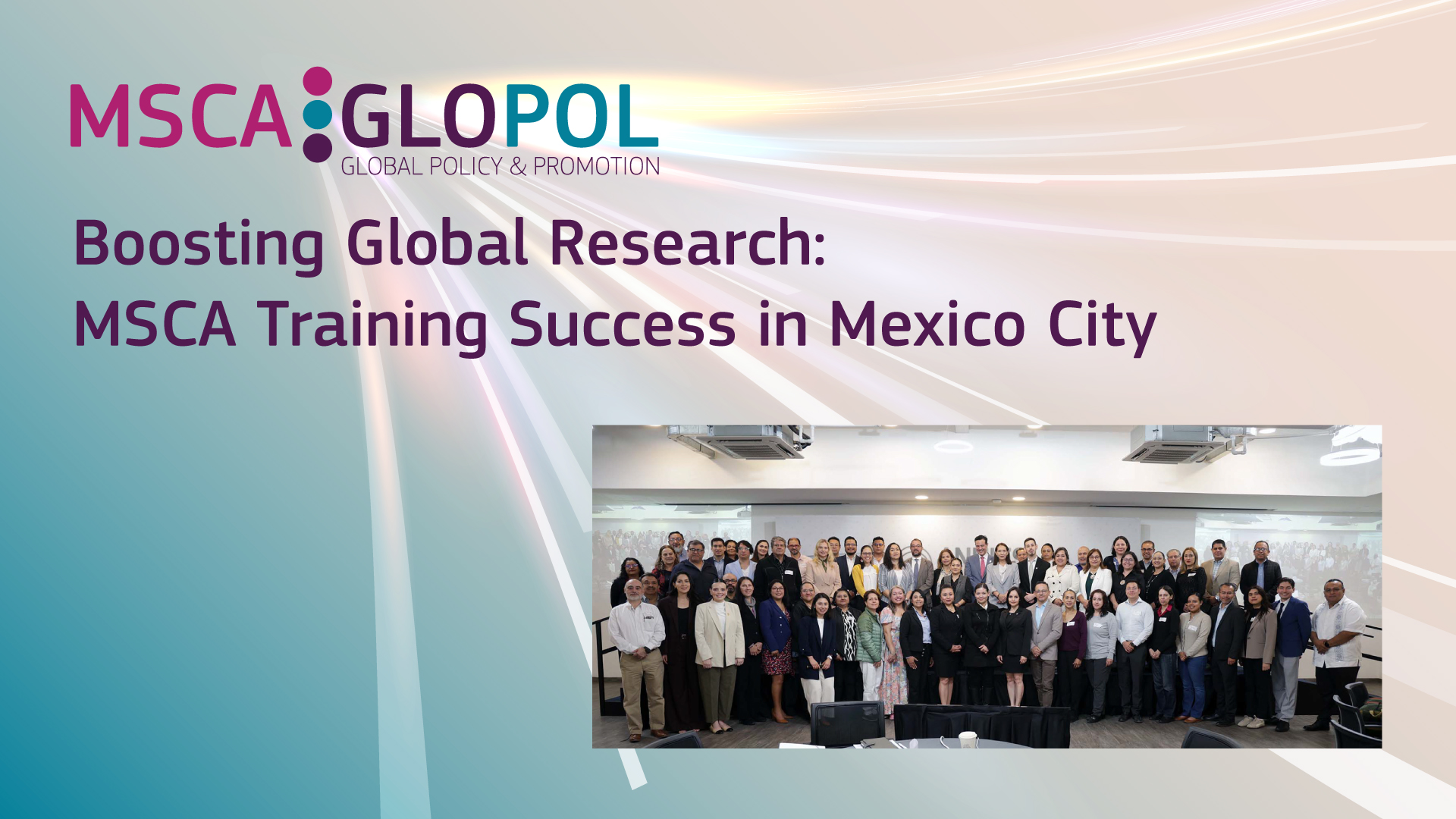
We are thrilled to share the success of our recent high-impact training session held in Mexico City on 12 May 2026, focused on the Marie Skłodowska-Curie Actions (MSCA) for research institutions from Mexico. Organized by ANUIES (Asociación Nacional de Universidades e Instituciones de Educación Superior – National Association of Universities and Higher Education Institutions). in collaboration with MSCA-GLOPOL, this half-day event brought together 97 dedicated participants—representing 52 distinct Mexican research institutions—to explore the transformative potential of Staff Exchanges (SE) and Doctoral Networks (DN). With only 60 in-person spots selected from over 250 applications, the energy was palpable as researchers from across the country gathered to strengthen international ties and elevate the quality of Mexican research submissions on the global stage.
The event peaked with a dynamic panel featuring four Mexican researchers currently leading successful MSCA SE projects. Their candid insights into consortium building and navigating funding provided invaluable roadmaps for institutions that, while not eligible for automatic EU funding, find immense value through strategic co-funding and institutional support. Led by the expert Viktoria Bodnarova (MSCA-GLOPOL Regional Liaison Officer) and MSCA practitioners, this session was a vital step toward empowering Mexican partners to foster long-term international collaborations and drive innovation forward.
The presentation delivered during the session is available here.


Leave a Reply