
On 12 and 13 February 2026, the MSCA-GLOPOL ASEAN team organised the MSCA-GLOPOL Info Days in Manila, the Philippines, in conjunction with the EU-ASEAN Peer-Learning Workshop: Aligning Frameworks in a Changing World. MSCA-GLOPOL implemented the activities in partnership with the EU-ASEAN Sustainable Connectivity Package (SCOPE) Higher Education Programme (SCOPE-HE) and De La Salle University (DLSU).
The Info Days consisted of three complementary activities designed to promote MSCA and strengthen EU–ASEAN cooperation in higher education and research. They brought together policymakers, representatives from education and labour ministries, the ASEAN Secretariat, EU Delegations, national qualification agencies, quality assurance bodies, accreditation councils, and academic staff from different Philippine universities . It highlighted MSCA schemes that facilitate institutional collaboration and researcher training, aligning with international standards and supporting the global exchange of knowledge and expertise.
1) MSCA-GLOPOL Session at EU–ASEAN Peer-Learning Workshop, 12–13 February 2026
The Workshop was part of the policy activities by the EU-ASEAN Sustainable Connectivity Package (SCOPE) Higher Education Programme (SCOPE-HE), led by the Netherlands Organisation for International Cooperation in Higher Education (NUFFIC) and the German Academic Exchange Service (DAAD) and supported by the Commission on Higher Education (CHED) in the Philippines, the ASEAN Secretariat and the European Union Delegation to the Philippines.
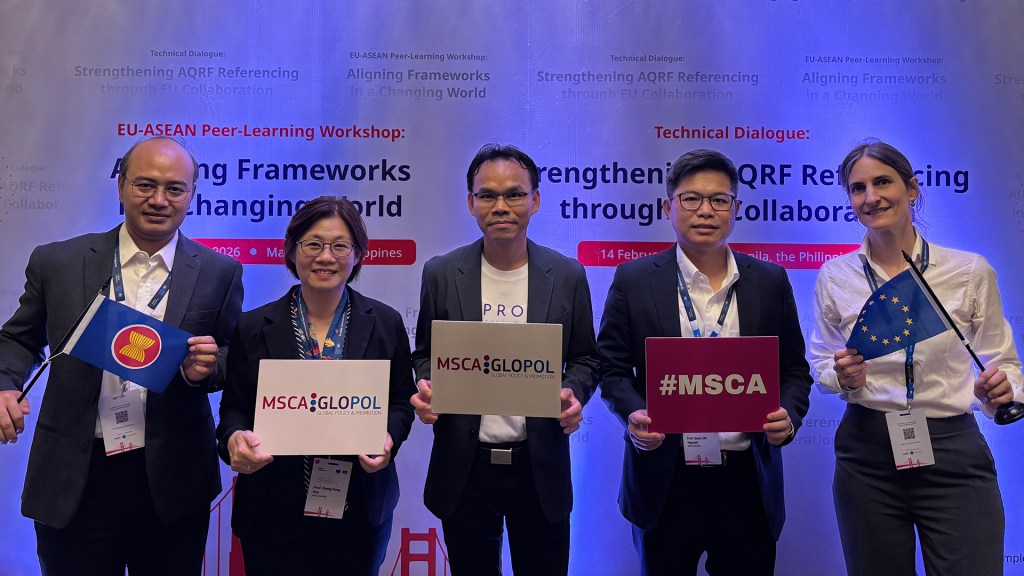
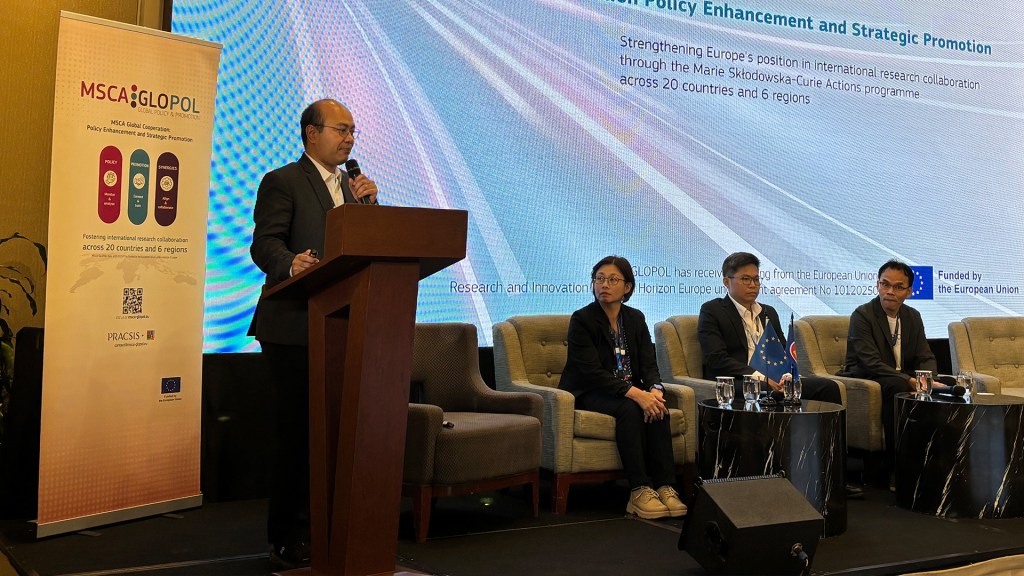
The Workshop programme included panel discussions on state of play of the ASEAN Qualification Framework (AQRF) and the European Qualification Framework (EQF), emerging trends and changing needs, as well as facilitated breakout sessions for in-depth exchanges for the close to 100 participants. Dr. Shirley Castañeda Agrupis, Chairperson of the Commission of Higher Education in the Philippines, H.E. Sujiro Seam, European Union Ambassador to ASEAN and Mr. Tan Tai Hiong, Head of the Service & Investment Division at the ASEAN Secretariat, delivered the Opening remarks and emphasized the need to strengthen cooperative efforts to maintain the relevance and impact of qualification systems amidst evolving challenges.
During the MSCA-GLOPOL session, the ASEAN team and MSCA alumni highlighted the following characteristics of the actions: the Marie Skłodowska-Curie Actions (MSCA) play a crucial role in implementing the European Qualification Framework (EQF) within the research domain. By focusing on higher EQF levels (7 and 8), the MSCA facilitates doctoral education, postdoctoral training, and staff exchanges. These actions set high benchmarks for competencies, skills, and career development, ensuring that qualifications remain recognized, transparent, and portable across Europe. In alignment with the ASEAN-EU Strategic Partnership Action Plan 2023-2027, MSCA initiatives are essential for enhancing connectivity, encouraging the internationalisation of higher education institutions, and strengthening cross-regional cooperation.
Three MSCA alumni shared their experiences: Prof. Siong Fong Sim from the University Malaysia Sarawak, Prof. Chanchai Boonla from Chulalongkorn University Thailand, and Prof. Quoc Chi Nguyen from Ho Chi Minh City University of Technology. They provided valuable insights into how MSCA projects have developed research capacity and skills within their institutions. They also shared their experiences and recommendations for successful project applications, underscoring the benefits of MSCA participation for both individuals and institutions.
- Prof Siong Fong Sim, University Malaysia Sarawak. See the presentation here.
- Dr Chanchai Boonla, Chulalongkorn University. See the presentation here.
- Dr Quoc Chi Nguyen, VNU-Ho Chi Minh City University of Technology. See the presentation here.
2) MSCA-GLOPOL Info Session at De La Salle University, 12 February 2026
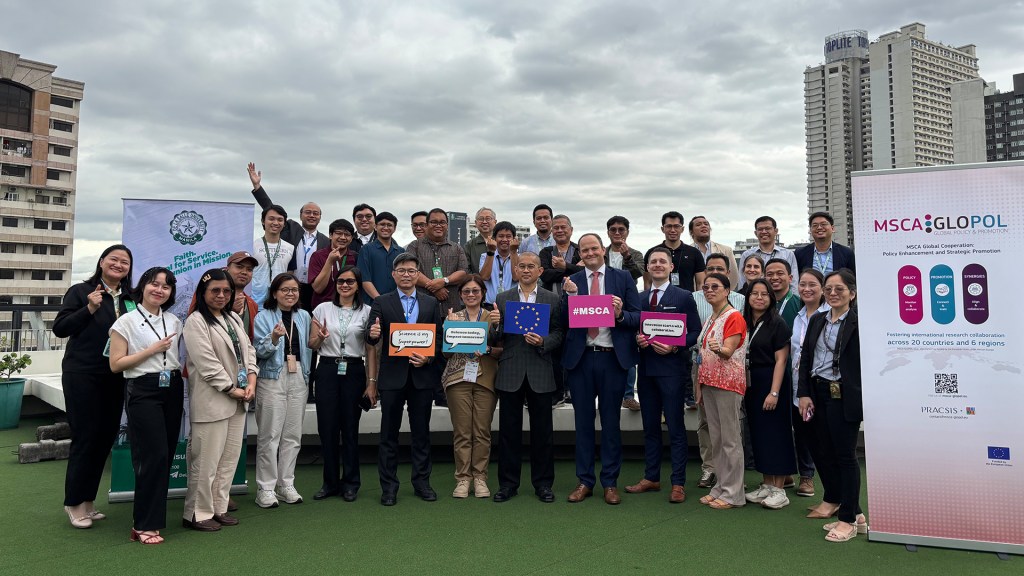
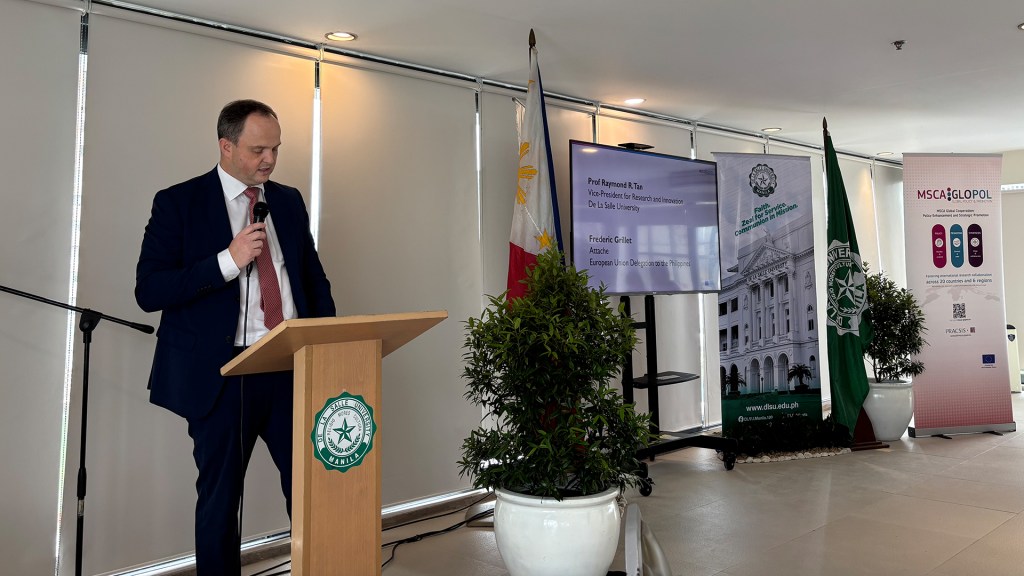
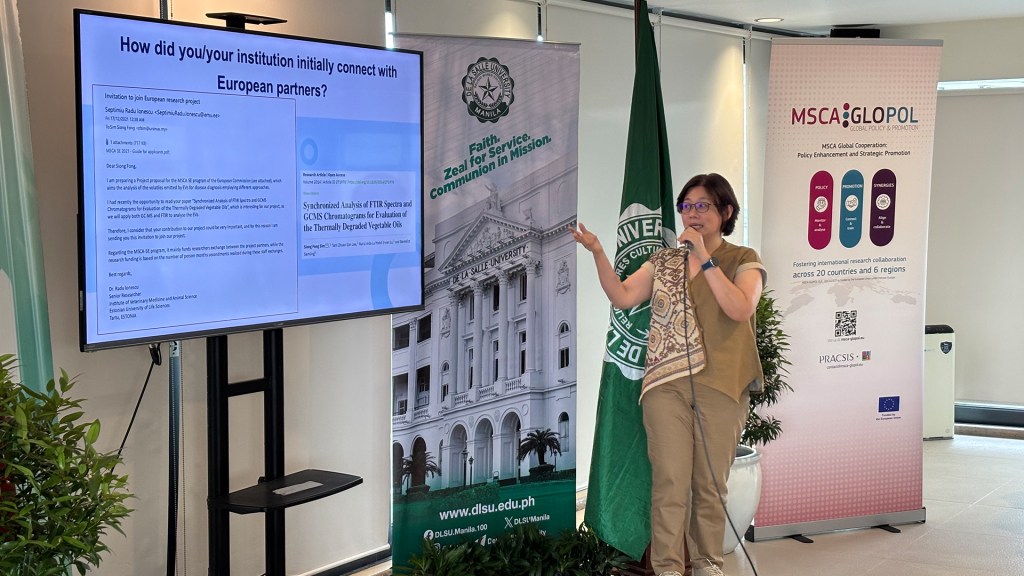
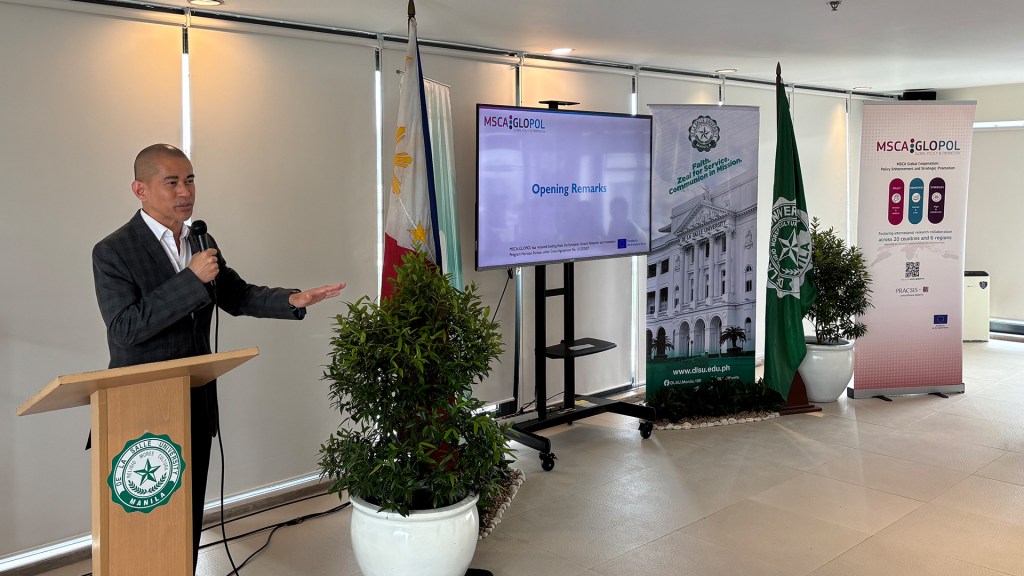
The MSCA-GLOPOL ASEAN team also collaborated with De La Salle University on an information session on MSCA Doctoral Networks (DN) and Staff Exchanges (SE), focusing on funding and cooperation opportunities Prof Raymond R. Tan, Vice-President for Research and Innovation at De La Salle University, and Frédéric Grillet, Attaché at the European Union Delegation to the Philippines delivered the Opening Remarks. Their messages stressed the value of cross-regional research ties and long-term capacity building. About 30 researchers joined the event. This session complemented the regional peer-learning workshop by offering a local, hands-on component for researchers at De La Salle University. De La Salle University is currently a project partner of the MSCA SE project FEMENA (FEMale ENtrepreneurs in Asia).
- Prof Siong Fong Sim, University Malaysia Sarawak, who shared insights from MSCA Staff Exchanges projects on low-energy edge computing and volatolomic approaches in reproductive technology. See the presentation here.
- Dr Quoc Chi Nguyen, VNU-Ho Chi Minh City University of Technology who reflected on his experience in European-ASEAN research collaboration. See the presentation here.
- Dr Francis de la Rosa from the DLSU Department of Chemistry guided the discussion and helped connect the MSCA opportunities with local research priorities. See the presentation here.
3) MSCA-GLOPOL ASEAN Webinar on Policy Enhancement & Strategic Promotion, 13 February 2026
Close to 120 researchers from across ASEAN attended the first Info Webinar on MSCA-GLOPOL on 13 February 2026. The representatives from universities and research organisations across ASEAN learnt from MSCA beneficiaries about the programme’s impact on institutional research capacity and international collaboration. The MSCA alumni, Prof. Siong Fong Sim from the University Malaysia Sarawak and Prof. Chanchai Boonla from Chulalongkorn University Thailand, including MSCA country representatives from Vietnam and Philippines, shared their project experiences. Prof Sim joined the research projects MSCA Staff Exchange projects ARTVOC & VOLATEVS and Prof Boonla the project called SUPRO-GEN.


Leave a comment