
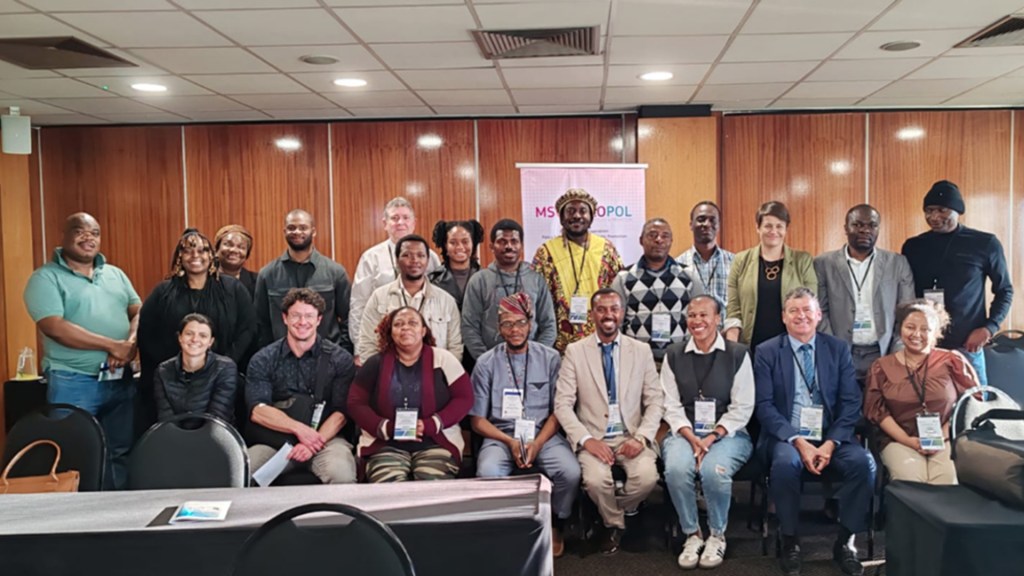
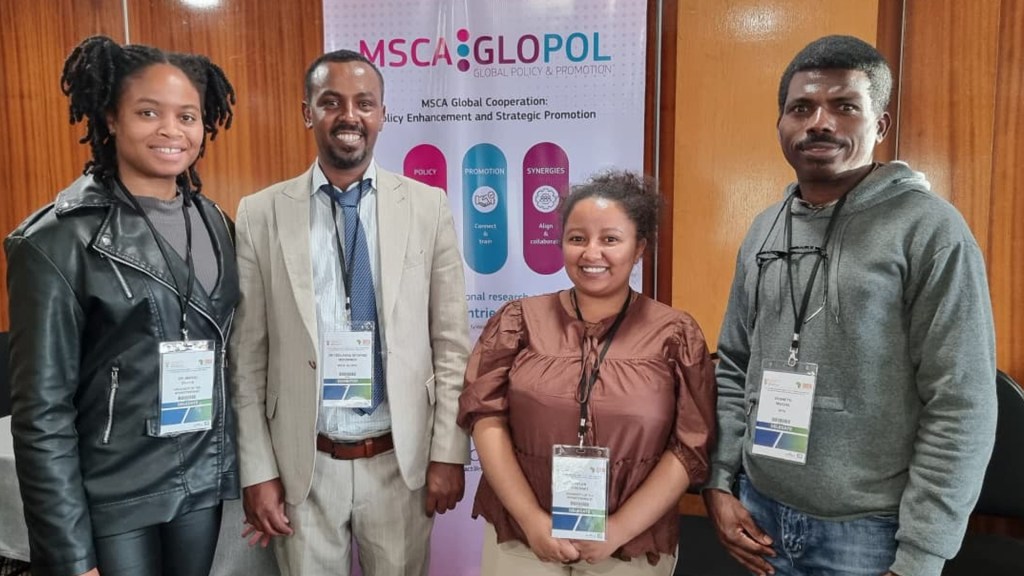
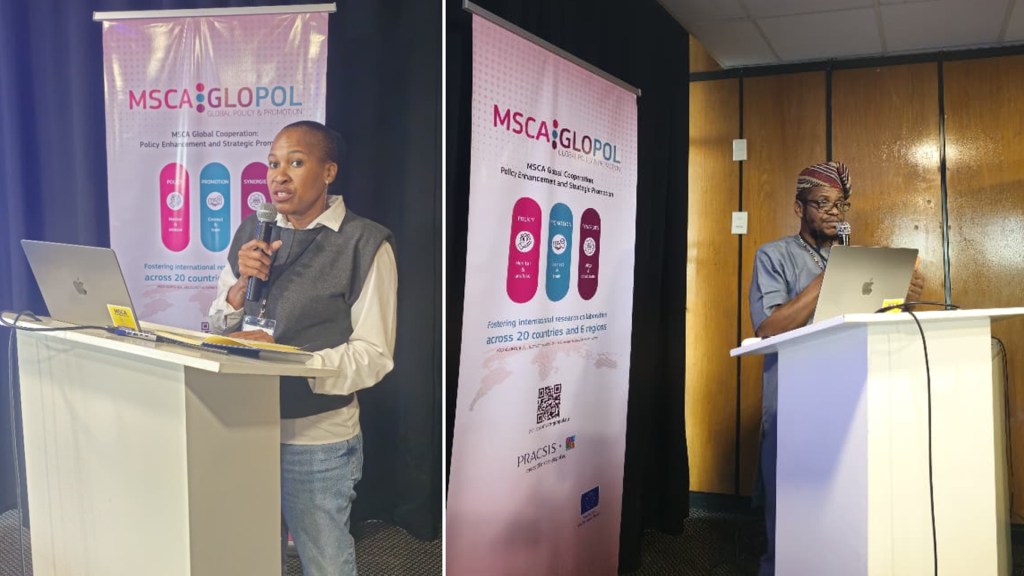
The MSCA-GLOPOL Side Event occurred successfully on 24 November 2025, as part of the 10th Science Forum South Africa (#SFSA2025) at the CSIR International Convention Centre in Pretoria. The event featured key speakers, including Dr. Laurent Bochereau, Minister-Counsellor for Science, Technology, and Innovation (STI) at the EU Delegation to the African Union; Dr. Yedilfana Setarge, Liaison Officer for MSCA-GLOPOL for the African Union/South Africa; Ms. Huba Boshoff, Erasmus+ Support Coordinator in South Africa; Dr. Maruf Sanni, an MSCA fellow and National Contact Point for Nigeria; and Dr. Maphuti Madiga, MSCA National Contact Point for South Africa and Deputy Director at the Department of Science, Technology, and Innovation in South Africa.
This event brought together experts in EU funding instruments and MSCA national contact points, alongside researchers, innovators, and academics from various South African institutions, as well as industry leaders. The side event attracted over 30 participants, providing valuable information, hands-on training, and fostering discussions and networking among stakeholders in South Africa. The primary objective of the side event was to introduce MSCA-GLOPOL, a three-year EU-funded project, to South African stakeholders. The project aims to enhance bilateral and bioregional cooperation agreements on Science, Technology, and Innovation (STI) between South Africa and the EU, while also fostering international research collaboration in Marie Skłodowska-Curie Actions (MSCA) across 20 countries and six regions, including vital partnerships with South Africa and the African Union. It aligns with the AU-EU innovation agenda and high-level policy dialogues at the AU-EU level and strategically promotes MSCA actions under Horizon Europe. The MSCA-GLOPOL project emphasizes policy analysis, stakeholder engagement, and strategic promotion, aligning with the EU’s overarching research priorities to encourage global participation in MSCA opportunities.
Key Presentations and Insights
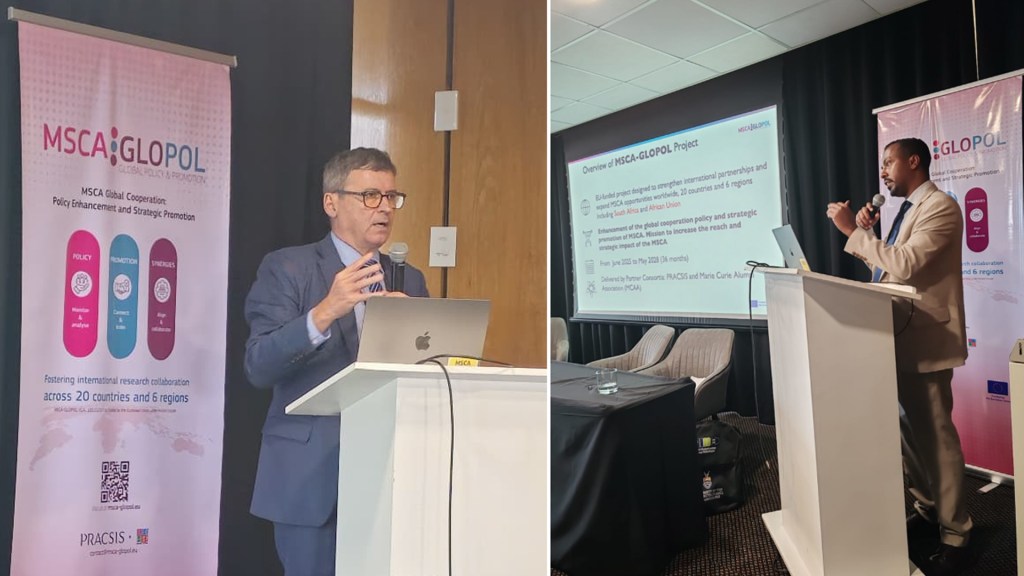
Dr. Laurent Bochereau, Minister-Counsellor for Science, Technology, and Innovation at the EU Delegation to the African Union, offered valuable insights into the collaborative opportunities available between the EU, South Africa, and the African Union. His presentation highlighted various funding and mobility options under Horizon Europe, particularly focusing on the Africa Initiatives and the Marie Skłodowska-Curie Actions research and training programme.
In detailing the EU funding landscape, Dr. Bochereau showcased successful projects implemented in South Africa and throughout the African Union, equipping attendees with the knowledge necessary to effectively navigate these funding and networking resources. He also highlighted impactful collaborative projects involving South African institutions. Furthermore, he encouraged active participation in international consortia, underlining the importance of leveraging EU funding mechanisms to address both global and regional challenges.
Dr. Yedilfana Setarge, the Liaison Officer for MSCA-GLOPOL for the African Union/South Africa, presented an overview of the MSCA-GLOPOL project, emphasizing the significance of MSCA actions—particularly Doctoral Networks and Staff Exchanges—in fostering research mobility and international collaboration. He provided a hands-on tutorial on understanding the MSCA calls and navigating the participants’ portal, equipping participants with practical skills to identify potential partners and access available calls for proposals. Moreover, Dr. Yedilfana discussed how to obtain a Participant Identification Code (PIC) and shared essential tips for building competitive consortia, thereby empowering South African researchers and institutions to engage more effectively with MSCA actions, particularly in the context of doctoral networks and staff-exchange research and training programmes.
Ms. Huba Boshoff, Erasmus+ Support Coordinator in South Africa, provided an overview of the various Erasmus+ schemes, detailing mobility and funding opportunities available to researchers and institutions. She highlighted the importance of MSCA in enhancing collaboration between South African and European entities. Through her structured presentation, Ms. Boshoff illustrated how the various schemes under the Erasmus+ programme can facilitate cross-border partnerships, thereby contributing to the broader goal of strengthening international research collaboration.
Dr. Maruf Sanni, an MSCA Fellow and national contact point, who shared firsthand experiences that enriched the discussion with practical insights into the application and execution of the MSCA program.
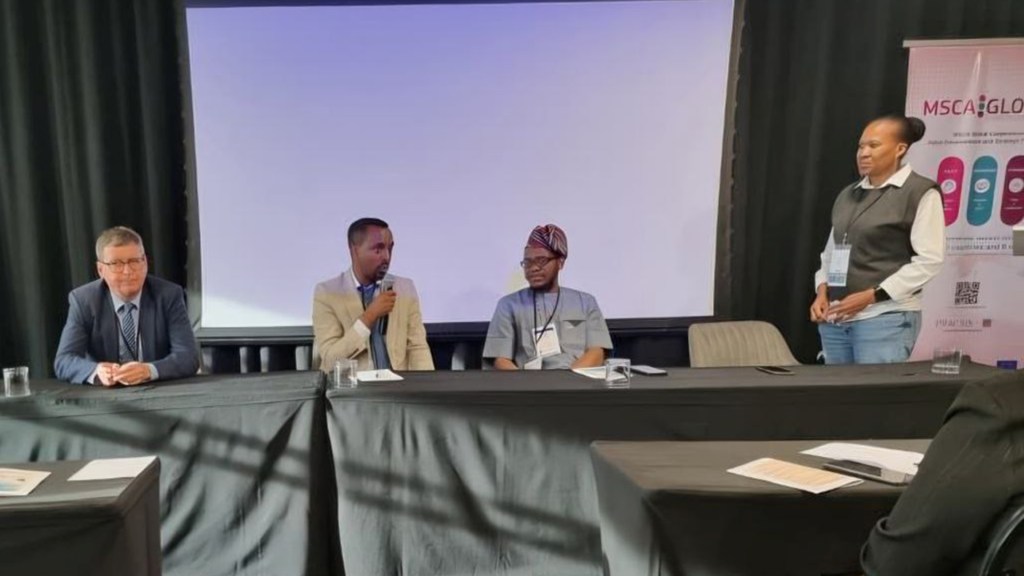
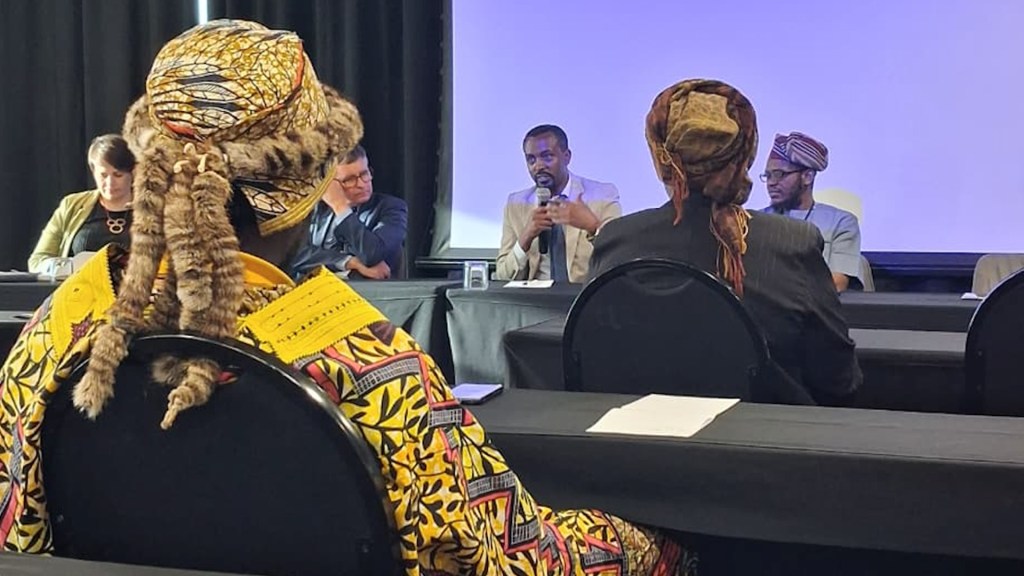
The session was moderated by Dr. Maphuti Madiga, who facilitated an engaging question-and-answer session that allowed participants to pose inquiries directly to the speakers. This Q&A session fostered meaningful interactions, with each speaker responding to the questions raised. The side event concluded with a speech from one of the female participants, who articulated her key takeaways and underscored the value of the timely information and practical insights shared about the MSCA. She encouraged her peers to proactively prepare for upcoming call cycles and emphasized the importance of engaging in international consortia.


Leave a comment