
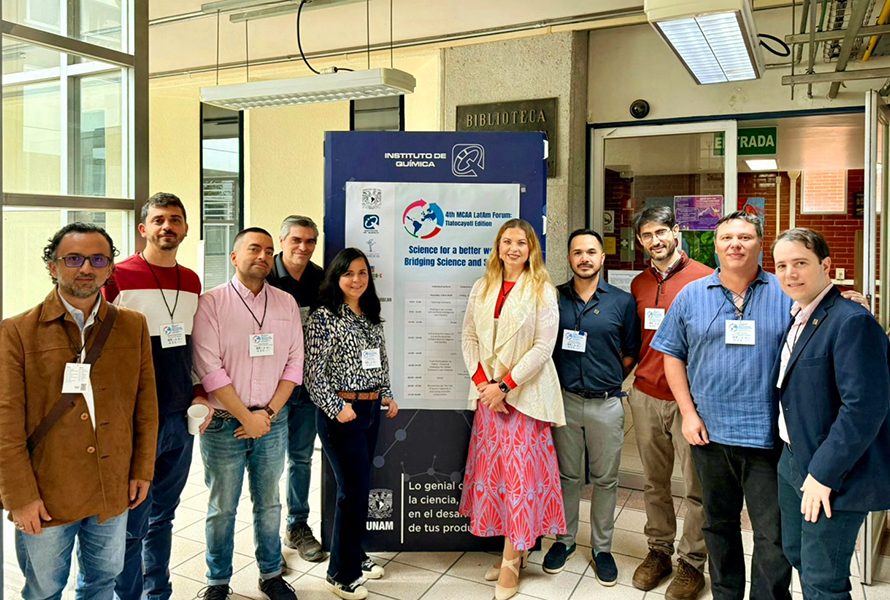
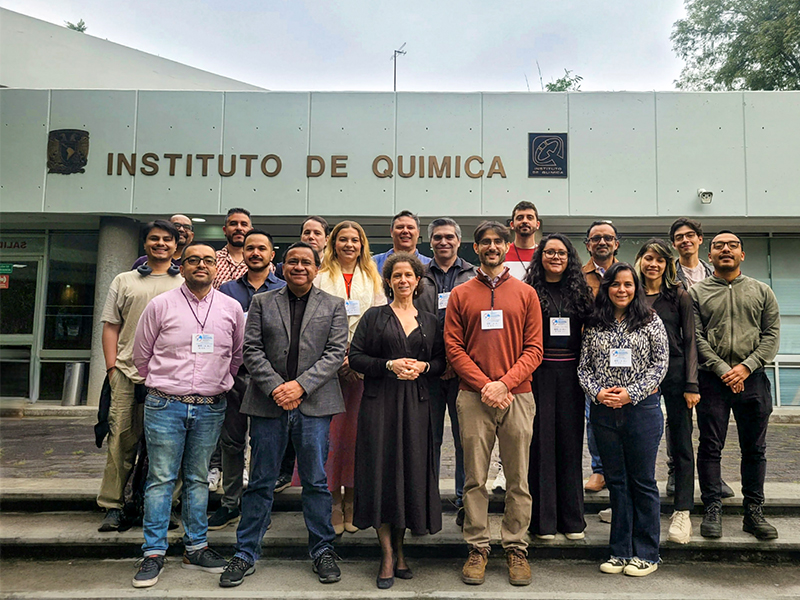
The first MSCA-GLOPOL Regional Flagship Event in Latin America and the Caribbean (LAC) took place at the Universidad Nacional Autónoma de México (UNAM) in October 2025. As part of the MCAA Latin American Forum, the gathering brought together researchers, policymakers, and science diplomats to strengthen partnerships between Europe and Latin America.
The session, titled “Latin–Europe Exchanges: From Collaborators to Co-Protagonists”, focused on fostering more balanced, inclusive, and mutually beneficial collaborations. It was moderated by Daniel Finkelstein-Shapiro, Chair of the MCAA Mexico Chapter.
Strengthening International Partnerships and Strategic Dialogue
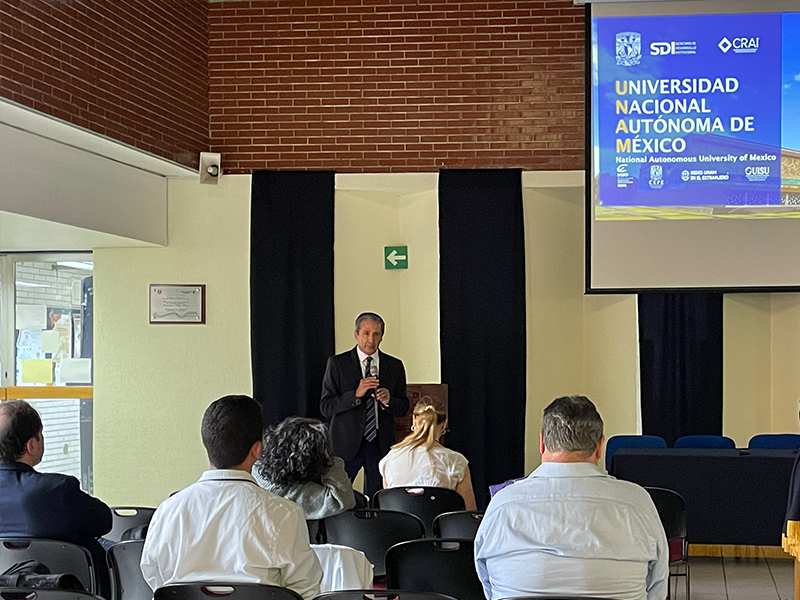
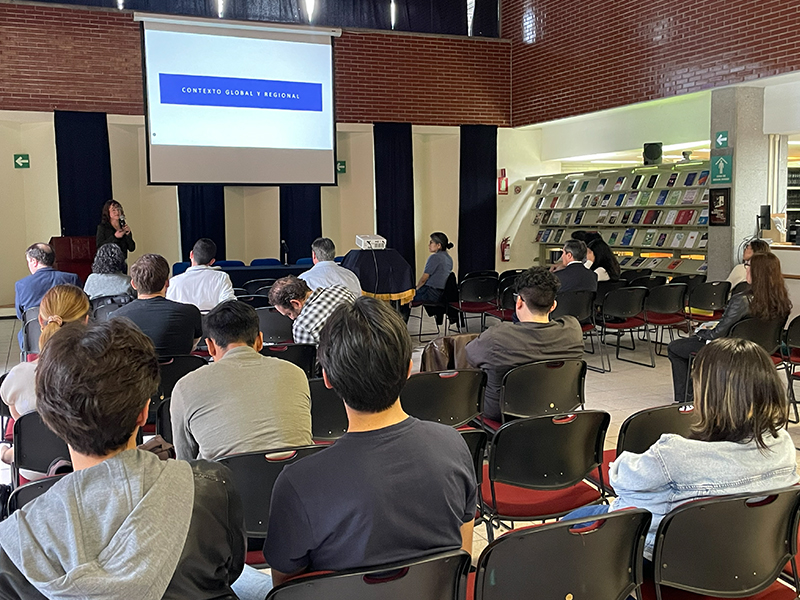
Maria Skłodowska-Curie Actions (MSCA) funding opportunities: Viktoria Bodnarova, Regional Contact Point for MSCA-GLOPOL from the European Commission, presented available funding schemes under European programmes, including doctoral and postdoctoral fellowships, staff exchanges, and ERC Synergy Grants. She noted that while Mexico is currently ineligible for some schemes, the new administration has shown readiness to renew collaboration with the EU.
Digital transformation and ethics: Víctor Castaño from UNAM discussed Industry 4.0 and 5.0, highlighting how digital technologies are reshaping social and ethical dimensions of science. He called for stronger academia–industry partnerships to ensure relevance, sustainability, and societal impact.
France–Latin America cooperation: Mélie Cornet, scientific attaché at the French Embassy in Mexico, showcased exchange initiatives such as the ECOS-Nord programme, which links French and Latin American researchers in mathematics and climate studies, including Sargassum remediation projects.
Internationalisation and communication: Julio Solano, Director of the UNAM Internationalisation Division, presented UNAM’s global network of 13 centres, many of which are in Europe. He underlined the need for institutional continuity abroad and better communication between researchers and international offices to maximise the use of existing programmes.
The session drew additional insights from Rodolfo Zanella, who reflected on his experience as UNAM’s representative in Paris.
Discussion and collaboration
Participants identified two main axes of cooperation between Latin America and Europe:
- Geographically anchored research, such as archaeology and biodiversity studies, where Latin America can provide expertise and study sites, while Europe can contribute with funding and infrastructure.
- Personal networks between researchers continue to drive collaboration in fundamental sciences.
Speakers discussed the need for greater reciprocity in funding opportunities and the potential of trilateral agreements (for instance, between France, Mexico, and Brazil) to align and strengthen existing programmes.
Key conclusions
The session concluded with several key recommendations from the speakers:
- Collaborations should be expanded to include both academic and business partners for sustainable outcomes.
- Trust and personal relationships are key to building lasting research partnerships.
- Reciprocity agreements should be renewed, and engagement should be fostered through diplomatic channels.
- Multi-country partnerships in Latin America should be encouraged to align funding and research priorities.
- Communication between researchers and university internationalisation offices should be improved to enhance programme uptake.
Participants agreed that Mexico’s internationally trained scientific community and strong institutional links provide a solid foundation to transition from geographically focused collaborations to partnerships addressing global scientific challenges.
The event concluded the MCAA Latin American Forum and laid the groundwork for follow-up actions with European partners. A key recommendation to the MSCA-GLOPOL project was to enhance communication around bilateral and multilateral agreements so that MSCA fellows and associated researchers can actively contribute to and expand these initiatives.
The event reinforced Latin America’s growing role in shaping global research collaboration through the MSCA framework. By bringing together voices from academia, diplomacy, and industry, the discussions highlighted how shared leadership and reciprocal partnerships can strengthen the region’s contribution to the European Research Area and global science diplomacy.


Leave a comment